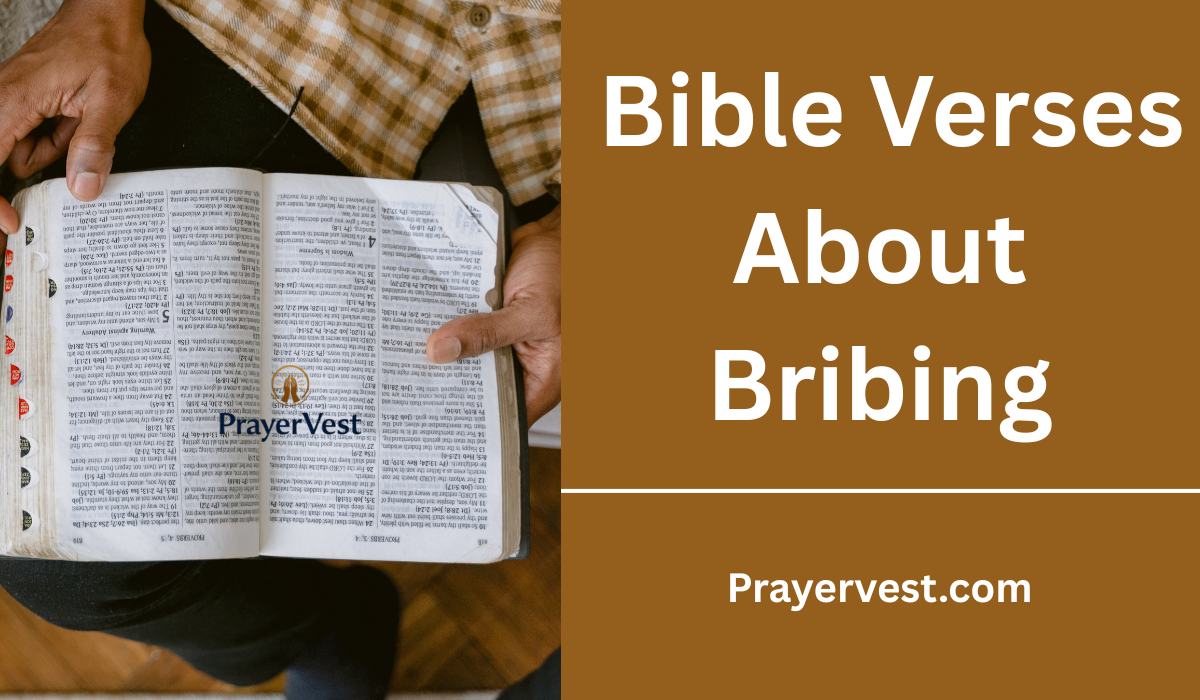
Scripture presents the idea of bribery in a remarkably clear manner, always framing it as a distortion of justice that corrupts the heart and fools the wise. The Bible sees the exchange of illegal gifts for favor not just as a social or political shortcoming but as a direct insult to God’s character, from the early legal laws of the Pentateuch to the poetic warnings of the Wisdom literature.
Being a God of perfect equity, He requires people made in His image, especially those in positions of power, to maintain an impartiality that cannot be bought, sold, or swayed by covert handshakes and ulterior motives.
The condemnation of bribery is a crucial defense for the weak throughout the biblical story. Scripture often connects accepting bribes to the mistreatment of the “widow, the fatherless, and the foreigner,” pointing out that those with the least resources suffer first when justice is for sale.
A recurring moral theme emerges from analyzing these verses: the “bribe” is seen as a trap that ensnares both the donor and the recipient in a circle of deceit. It essentially destroys the trust that forms the basis of a moral society by substituting the subjective desire for gain for the objective truth of a situation.
In the end, a believer is called to a higher level of integrity that goes beyond legalistic conformity when they read Bible scriptures about bribery. It pushes us to consider the subtle ways in which we may use deceit to obtain “undue influence” or favor. The biblical command is to walk with “clean hands and a pure heart,” whether in a courtroom, at work, or in interpersonal relationships. This introduction to the biblical view of bribery encourages us to place a higher value on the “unfading treasure” of a clean conscience and a good reputation than on the transient and tainted benefits obtained via the “gift that subverts justice.”
40 Inspiring Bible Verses About Bribing (2026)
1. Exodus 23:8
“Do not accept a bribe, for a bribe blinds those who see and twists the words of the innocent.”
This foundational commandment establishes The Perversion of Perception. It teaches us that bribery is not merely a financial transaction but a cognitive one; it physically alters a person’s ability to remain objective. This reminds us that once we accept an illicit favor, our judgment becomes clouded, and we lose the moral clarity required to distinguish right from wrong. In God’s eyes, a “gift” used to influence a decision is a spiritual blindfold that leads to the suffering of the innocent.
2. Proverbs 17:23
“The wicked accept bribes in secret to pervert the course of justice.”
This verse highlights The Secrecy of Corruption. It notes that bribery often thrives in the shadows, away from public accountability. This teaches us that the “secret” nature of the transaction is a sign of its wickedness. This reminds us that true integrity is found in actions that can withstand the light of day. When we seek to “pervert the course” of what is fair for personal gain, we align ourselves with the “wicked,” trading our eternal character for a hidden, temporary benefit.
3. Deuteronomy 16:19
“Do not pervert justice or show partiality. Do not accept a bribe, for a bribe blinds the eyes of the wise and twists the words of the righteous.”
This passage addresses The Vulnerability of the Wise. It serves as a sobering warning that even those with great wisdom and a righteous reputation are not immune to the lure of a bribe. This teaches us that no level of spiritual maturity allows us to “handle” corruption safely. This reminds us that the only way to protect our righteousness is to refuse the bribe entirely. By avoiding partiality, we mirror the character of God, who is the ultimate Impartial Judge.
4. Isaiah 1:23
“Your rulers are rebels, partners with thieves; they all love bribes and chase after gifts. They do not defend the cause of the fatherless; the widow’s case does not come before them.”
This prophetic indictment explores The Social Cost of Greed. Isaiah reveals that when leaders prioritize “chasing after gifts,” the most vulnerable members of society—the orphans and widows—are the ones who pay the price. This teaches us that bribery is a social sin that creates systemic oppression. This reminds us that our personal integrity has a direct impact on our community; when we reject corruption, we help preserve a system where the weak can find justice.
5. Proverbs 15:27
“The greedy bring ruin to their households, but the one who hates bribes will live.”
This verse contrasts The Destruction of Greed vs. The Life of Integrity. It warns that the “quick gain” of a bribe eventually brings “ruin” to one’s own family and legacy. This teaches us that the consequences of dishonesty are not contained to the individual but spill over into the home. This reminds us that “hating” bribes—having a visceral distaste for dishonest gain—is a protective measure that ensures long-term life and stability for ourselves and those we love.
In this section, we move deeper into The Corrupting Influence of Personal Gain, looking at how the lure of a bribe can dismantle even the most established reputations. These verses emphasize that God’s standard for justice is absolute, and He holds both the giver and the receiver accountable for the “blindness” that follows dishonest exchanges.
6. 1 Samuel 8:3
“But his sons did not follow his ways. They turned aside after dishonest gain and accepted bribes and perverted justice.”
This verse records The Tragedy of Legacy. Even though Samuel was a man of immense integrity, his sons chose a different path. This teaches us that righteousness is not inherited but chosen. This reminds us that “dishonest gain” is often the first step in turning away from a godly heritage. When we prioritize the bribe over the principle, we don’t just lose our way—we “pervert justice” for everyone under our influence.
7. Job 15:34
“For the company of the godless will be barren, and fire will consume the tents of those who love bribes.”
This sobering passage addresses The Ultimate Futility of Corruption. It uses the imagery of “barrenness” and “fire” to show that wealth acquired through bribery cannot sustain life. This teaches us that the “tents” (or lives/businesses) built on bribes have no spiritual foundation. This reminds us that while a bribe may seem to provide comfort today, it is an invitation for divine judgment that eventually consumes whatever was falsely gained.
8. Ecclesiastes 7:7
“Extortion turns a wise person into a fool, and a bribe corrupts the heart.”
This wisdom from Solomon targets The Internal Erosion of Character. It teaches us that the damage of a bribe is not just legal—it is psychological and spiritual. This reminds us that bribery “corrupts the heart,” eating away at our capacity for empathy and truth. Even a “wise person” loses their discernment when they participate in extortion or bribery, proving that no one is “smart enough” to outrun the moral decay that follows.
9. Psalm 26:9-10
“Do not take away my soul along with sinners… in whose hands are wicked schemes, whose right hands are full of bribes.”
In this prayer of David, we see The Desire for Separation from Evil. David asks God to distinguish him from those whose “right hands are full of bribes.” This teaches us that our associations matter. This reminds us that “wicked schemes” and bribery go hand-in-hand. By keeping our hands clean of such “gifts,” we protect our souls from being swept away with those who live for self-interest rather than God’s glory.
10. Proverbs 29:4
“By justice a king gives country stability, but those who are greedy for bribes tear it down.”
This verse highlights The National Impact of Personal Integrity. It teaches us that the stability of an entire “country” rests on the refusal of bribes by its leaders. This reminds us that bribery is a destructive force that “tears down” social order. When we choose honesty over a bribe, we aren’t just making a personal choice; we are contributing to the strength and stability of the society we live in.
11. Psalm 15:1, 5
“Lord, who may dwell in your sacred tent? Who may live on your holy mountain? …who lends money to the poor without interest; who does not accept a bribe against the innocent.”
This Psalm defines The Qualifications for God’s Presence. It asks the most important question a believer can ask: “How can I be close to God?” The answer includes the specific refusal to “accept a bribe against the innocent.” This teaches us that our private ethics are a gatekeeper to our spiritual intimacy. This reminds us that a heart free from the entanglement of bribery is a heart that is welcome in the “sacred tent” of the Almighty.
12. Isaiah 33:15-16
“Those who walk righteously and speak what is right… who stop their ears against plots of murder and shut their eyes against contemplating evil—they will dwell on the heights.”
This passage describes The Safety of the Upright. It specifically mentions those who “shake their hands free from bribes” (implied in the broader context of righteous walking). It teaches us that when we refuse to touch dishonest gain, God provides a “refuge in the mountain fortress.” This reminds us that integrity is our greatest security. While the one who takes a bribe is always looking over their shoulder, the one who rejects it “will have their food supplied and their water will not fail.”
13. Proverbs 28:20
“A faithful person will be richly blessed, but one eager to get rich will not go unpunished.”
This verse contrasts Faithfulness vs. Haste. Bribery is often the tool of the “eager,” those who want success without the wait. This teaches us that God’s blessing is tied to the “faithful” path of steady integrity. This reminds us that any wealth gained through a “shortcut” like a bribe carries a hidden penalty, whereas the blessings of the faithful are “rich” and carry no sorrow with them.
14. Amos 5:12
“For I know how many are your offenses and how great are your sins. There are those who oppress the innocent and take bribes and deprive the poor of justice in the courts.”
This prophetic cry highlights The Omniscience of the Judge. It teaches us that no bribe is ever truly “secret” because God “knows how many are your offenses.” This reminds us that we are ultimately accountable to a Heavenly Court where justice cannot be bought. Knowing that God sees the exchange provides the strength to say “no” to the influence of the world, choosing instead to be advocates for the poor who are often the victims of such corruption.
15. Proverbs 10:2
“Ill-gotten treasures have no lasting value, but righteousness delivers from death.”
This final verse in this section addresses The Shelf-Life of Corruption. It teaches us that “treasures” gained through bribery (ill-gotten) have an expiration date; they cannot provide help on the day of trouble. This reminds us that “righteousness”—the simple act of doing what is right regardless of the cost—is a form of spiritual currency that “delivers from death.” It is better to have little with a clear conscience than to have “ill-gotten treasures” that fail when they are needed most.
16. Luke 3:14
“Then some soldiers asked him, ‘And what should we do?’ He replied, ‘Don’t extort money and don’t accuse people falsely—be content with your pay.’”
This verse provides The Antidote to Corruption. John the Baptist identifies that the root of bribery and extortion is often a lack of contentment. This teaches us that when we are unsatisfied with our “pay” or our progress, we become vulnerable to “shaking down” others for more. This reminds us that spiritual contentment acts as a shield; when we trust God’s provision, the lure of an illicit “extra” gift loses its power over us.
17. Acts 24:26
“At the same time he was hoping that Paul would offer him a bribe, so he sent for him frequently and talked with him.”
This passage records The Integrity of the Apostle. Governor Felix kept Paul in prison, not because of a crime, but because he was “hoping for a bribe.” This highlights the reality that the righteous often suffer because they refuse to play the game of corruption. This reminds us that Paul chose the prison cell over a dishonest shortcut to freedom. It teaches us that our testimony is strengthened when we endure hardship rather than compromise our values for an easy exit.
18. 1 Timothy 3:8
“In the same way, deacons are to be worthy of respect, sincere, not indulging in much wine, and not pursuing dishonest gain.”
This verse outlines The Requirements for Leadership. In the early church, leaders were strictly forbidden from “pursuing dishonest gain.” This teaches us that those who represent Christ must have a reputation that is above suspicion regarding money. This reminds us that we cannot lead others toward God if our hands are stained by bribes. Integrity in financial matters is a non-negotiable prerequisite for spiritual authority.
19. Acts 8:20
“Peter answered: ‘May your money perish with you, because you thought you could buy the gift of God with silver!’”
This dramatic encounter with Simon the Sorcerer exposes The Arrogance of the Bribe. Simon tried to “bribe” the Apostles to give him the power of the Holy Spirit. Peter’s fierce rebuke teaches us that the things of God—grace, favor, and power—cannot be bought. This reminds us that a “bribery mindset” insults the sovereignty of God. It attempts to put the Creator in our debt, failing to realize that His gifts are given freely to the humble, not sold to the highest bidder.
20. Hebrews 13:5
“Keep your lives free from the love of money and be content with what you have, because God has said, ‘Never will I leave you; never will I forsake you.’”
This concluding verse addresses The Root of the Matter. It teaches us that the “love of money” is the engine behind every bribe. By anchoring our security in the promise that God will “never leave us,” we remove the fear that drives us to seek dishonest gain. This reminds us that our true wealth is the presence of God. When we are satisfied in Him, the “secret gift” of a bribe looks like dross compared to the gold of His faithfulness.
21. Job 36:18
“Be careful that no one entices you by riches; do not let a large bribe turn you aside.”
This verse highlights The Power of Enticement. It teaches us that bribery is a form of temptation specifically designed to “turn us aside” from the straight path. This reminds us that the larger the bribe, the greater the spiritual danger. We are warned to be on high alert when “riches” are offered in exchange for a compromise of principle, as the cost of being turned aside is far greater than any financial gain.
22. Proverbs 21:14
“A gift given in secret soothes anger, and a bribe concealed in the cloak pacifies great wrath.”
This observation provides The Psychology of Manipulation. While it acknowledges that a bribe can temporarily “soothe anger,” it frames this as a manipulative tactic rather than a righteous solution. This teaches us that using money to bypass conflict or consequences avoids the necessary work of repentance and reconciliation. This reminds us that “concealing” a gift in a cloak is a sign of a deceptive heart that seeks to control others through their greed rather than their conscience.
23. Micah 7:3
“Both hands are skilled in doing evil; the ruler demands gifts, the judge accepts bribes, the powerful dictate what they desire—they all conspire together.”
This prophetic cry describes The Web of Corruption. It teaches us that bribery rarely happens in isolation; it creates a “conspiracy” where rulers, judges, and the powerful all feed off one another. This reminds us that participating in a bribe makes us “skilled in doing evil” and connects us to a larger system of oppression. By refusing to “conspire,” the believer stands as a witness against the decay of society.
24. Psalm 101:7
“No one who practices deceit shall dwell in my house; no one who utters lies shall continue before my eyes.”
This verse reveals the Exclusion of the Deceptive. While it does not use the word “bribe” explicitly, it addresses the “practice of deceit” that is inherent in every corrupt transaction. It teaches us that those who thrive on dishonest gain lose their “dwelling” in God’s favor. This reminds us that our goal is to “continue before His eyes”—a privilege reserved for those who prioritize truth over the “uttering of lies” for profit.
25. Matthew 16:26
“What good will it be for someone to gain the whole world, yet forfeit their soul? Or what can anyone give in exchange for their soul?”
This teaching from Jesus offers the Ultimate Accounting. It places the bribe in its final context. If a bribe helped you “gain the world” (or a promotion, a court case, or a business deal), it is still a loss if it costs you your soul. This teaches us that there is no “exchange rate” that makes bribery worth it. This reminds us that our soul is our most precious asset, and it is far better to be poor with a soul intact than wealthy with a soul that has been sold.
26. Proverbs 22:1
“A good name is more desirable than great riches; to be esteemed is better than silver or gold.”
This verse establishes The Priority of Reputation. It teaches us that the “silver and gold” acquired through a bribe are a poor trade for one’s character. This reminds us that when we reject the temptation to buy favor, we are investing in a “good name” that will serve as our greatest asset in the eyes of both God and man. A reputation for integrity is a currency that never devalues.
27. Zechariah 7:9-10
“This is what the Lord Almighty said: ‘Administer true justice; show mercy and compassion to one another… Do not plot evil against each other.’”
This passage provides the Positive Mandate. It teaches us that the absence of bribery is only the beginning; we must actively “administer true justice.” This reminds us that we are called to be agents of compassion. When we refuse a bribe, we create space for “mercy” to flow, ensuring that the outcome of a situation is determined by truth rather than by who has the deepest pockets.
28. Matthew 5:8
“Blessed are the pure in heart, for they will see God.”
This Beatitude addresses the Vision of the Integrity-Driven. It teaches us that “purity of heart” is required to perceive God’s work in our lives. This reminds us that bribery introduces “clutter” and guilt into the heart, obstructing our spiritual vision. By maintaining a heart that is “pure” from the desire for illicit gain, we keep the windows of our soul clear so that we can “see God” moving in our circumstances.
29. 1 Peter 3:16
“…keeping a clear conscience, so that those who speak maliciously against your good behavior in Christ may be ashamed of their slander.”
This verse focuses on The Power of a Clear Conscience. It teaches us that the refusal of a bribe provides a powerful defense against accusation. This reminds us that when we walk in total transparency, we have nothing to hide. Even if others try to tear us down, our “clear conscience” stands as a silent witness that eventually puts malicious talk to rest.
30. Revelation 22:12
“Look, I am coming soon! My reward is with me, and I will give to each person according to what they have done.”
This final verse offers The Eternal Payday. It reminds us that every time we turn down a bribe or refuse to participate in corruption, God is taking note. It teaches us that Jesus is the ultimate “Paymaster.” This reminds us that the “reward” he brings—based on our faithfulness and integrity—will be infinitely more satisfying and enduring than any “secret gift” offered in this life.
31. Proverbs 11:1
“The Lord detests dishonest scales, but accurate weights find favor with him.”
This verse highlights the Theology of Fairness. While it refers to commerce, it applies directly to bribery—the ultimate “dishonest scale” that tips justice in favor of the wealthy. It teaches us that God is personally offended by systems of bias. This reminds us that when we reject a bribe, we are aligning ourselves with the “accurate weights” of God’s character, ensuring our lives “find favor” in His sight.
32. 1 Samuel 12:3
“Here I stand. Testify against me in the presence of the Lord… Whom have I cheated? Whom have I oppressed? From whose hand have I accepted a bribe to make me shut my eyes?”
This is The Boldness of a Clean Life. At the end of his leadership, Samuel challenged the entire nation to find a single instance of corruption in his record. This teaches us the goal of every believer: to live so transparently that we can invite scrutiny without fear. This reminds us that the greatest freedom is not having “pockets full of silver,” but having eyes that never had to “shut” because of a bribe.
33. Psalm 106:3
“Blessed are those who act justly, who always do what is right.”
This simple beatitude focuses on The Consistency of Character. It teaches us that “acting justly” is not a one-time event but an “always” commitment. This reminds us that rejecting a bribe today is part of a lifelong rhythm of righteousness. The “blessing” promised here is the deep-seated joy that comes from knowing our external actions are in total harmony with our internal convictions.
34. 2 Chronicles 19:7
“Now let the fear of the Lord be on you. Judge carefully, for with the Lord our God there is no injustice or partiality or bribery.”
This verse serves as the Supreme Example. It reminds us that our standard for behavior is God Himself. Since there is “no bribery” in Him, there can be no bribery in those who represent Him. It teaches us that “judging carefully” requires a holy fear that overrides the temptation of personal gain. This reminds us that we are most like our Father when we are most impartial.
35. Proverbs 28:16
“A tyrannical ruler practices extortion, but one who hates ill-gotten gain will enjoy a long life.”
This concluding proverb links Integrity to Longevity. It teaches us that “ill-gotten gain” (bribes) creates a “tyrannical” and unstable life. Conversely, “hating” such gain is a recipe for endurance. This reminds us that while a bribe might solve a problem for a day, a commitment to honesty preserves our peace and our health for a lifetime.
36. Job 34:19
“He shows no partiality to princes and does not favor the rich over the poor, for they are all the work of his hands.”
This verse reminds us of the Equalizing View of the Creator. It teaches us that the very foundation of bribery—the belief that the wealthy deserve more “favor” than the poor—is a theological error. This reminds us that when we refuse to show partiality through bribes, we are honoring the “work of His hands.” We treat everyone with equal justice because we recognize that every person carries the same divine image, regardless of their ability to pay for influence.
37. Proverbs 16:8
“Better a little with righteousness than much gain with injustice.”
This proverb provides The Simple Math of Integrity. It challenges the worldly logic that “more is always better.” It teaches us that the quality of our wealth matters more than the quantity. This reminds us that “a little” money with a clean conscience provides more peace than “much gain” filtered through a bribe. This perspective protects us from the desperation that often leads people to accept illicit gifts in hopes of reaching financial milestones faster.
38. Isaiah 5:22-23
“Woe to those… who acquit the guilty for a bribe, but deny justice to the innocent.”
This prophetic “Woe” is The Final Warning of Divine Judgment. It targets the specific reversal of morality that bribery causes: the guilty going free while the innocent suffer. It teaches us that God’s wrath is provoked when justice is commodified. This reminds us that our personal integrity acts as a barrier against social decay. By refusing to “acquit for a bribe,” we prevent the moral inversion that Isaiah warns will bring disaster upon a nation.
39. Psalm 119:36
“Turn my heart toward your statutes and not toward selfish gain.”
This verse is The Prayer for Internal Realignment. It acknowledges that the heart naturally drifts toward “selfish gain” (which is the root of bribery). It teaches us that we need divine help to stay honest. This reminds us that integrity is a daily prayer. By asking God to “turn” our hearts toward His Word, we are asking Him to make us the kind of people who are spiritually repulsed by the idea of a bribe.
40. Matthew 25:21
“Well done, good and faithful servant! You have been faithful with a few things; I will put you in charge of many things. Come and share your master’s happiness!”
This final verse provides The Ultimate Validation. It reminds us that our “faithfulness with a few things”—including the small, secret decisions to reject a bribe—is the prerequisite for eternal responsibility. It teaches us that true “promotion” doesn’t come from buying favor; it comes from God’s approval. This reminds us that the “Master’s happiness” is the only reward that truly satisfies, making every bribe we ever turned down feel like a small price to pay for such a glorious end.
Conclusion
In conclusion, the biblical examination of bribery shows a persistent exhortation to radical integrity that puts God’s fear above human favor. Scripture makes it very evident that bribery undermines both the stability of the community and the character of the person, even though it may provide a “shortcut” to success or a momentary way out of problems. By declining the “secret gift” and the temptation of illegal profit, we align ourselves with the attributes of an impartial and fully just Creator. The enduring serenity of a clear conscience and the “crown of righteousness” that no quantity of silver or gold can purchase are the genuine rewards for a believer, not the transient benefits of a tilted scale.
In the end, these passages are a potent reminder that being truthful in our private interactions is closely related to our message to the world. In a society that is frequently clouded by greed, we reflect the light of Christ when we walk in transparency and abstain from corrupt institutions. This dedication to justice shows a deep faith in God’s sovereignty and His capacity to provide for those who walk upright, even when doing so comes at a personal sacrifice. As we wrap up this study, let us be inspired to “do justice, love mercy, and walk humbly,” understanding that the greatest contribution we can give to God’s Kingdom is a life of unwavering truth.